Vascular Health and Treatment Response to Inhaled Nitric Oxide in COPD

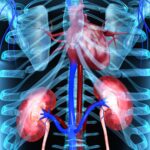
In patients with advanced chronic obstructive pulmonary disease (COPD), the lung’s vascular network is often severely thinned or damaged. This structural loss makes it unclear whether selective pulmonary vasodilators—treatments designed to expand these vessels—provide any real clinical benefit. In a recently published study, researchers—including CVC faculty members Drs. Sean van Diepen and Jason Weatherald—investigated whether inhaled nitric oxide (iNO) […]

Read Article


Evaluating the Clinical Efficacy of Routine Magnesium Interventions in Acute Heart Failure

While clinical medicine continues to evaluate the necessity of various interventions, the routine use and significance of serum magnesium testing and intravenous (IV) magnesium treatments for heart failure (HF) remain uncertain. To bridge this knowledge gap, CVC researchers analyzed 78,957 acute HF episodes recorded in Alberta between 2012 and 2020. This retrospective study investigates whether these common […]

Read Article


Navigating the Ethics and Regulation of Gene-Editing Therapies

The field of gene-editing therapy is a rapidly evolving frontier with the potential to transform the treatment of both rare and common diseases. By modifying genetic material to silence or reactivate specific genes, these therapies offer the promise of durable, lifelong health benefits. However, transitioning from laboratory discovery to clinical practice requires navigating a complex […]

Read Article


Dr. Cindy Westerhout Appointed Adjunct Professor of Medicine

The CVC is pleased to announce that Cindy Westerhout, PhD, has been appointed as Adjunct Professor of Medicine (Cardiology) at the University of Alberta. Dr. Westerhout currently serves as the Associate Director (Research & Strategy), Clinical Trial Statistics at the CVC and is a co-founder of the Biomedical AnaLytics Studio And Methods Unit (BALSAM). This […]

Read Article


Biomarker Utility in Type 2 Myocardial Infarction

A myocardial infarction (MI), or heart attack, occurs when heart muscle cells die from oxygen deprivation. Type 1 (T1MI) is typically caused by a blood clot within a coronary artery, whereas Type 2 (T2MI) results from an imbalance between oxygen supply and demand in the cardiac tissue. Distinguishing between the two is challenging in practice […]

Read Article


Time-Sensitive Intervention in STEMI: Quantifying the Benefits of PPCI Within the First Hour

New research from the STREAM-1 and -2 clinical trials underscores a critical window for treating ST-elevation myocardial infarction (STEMI)—a severe heart attack caused by a completely blocked artery. Although the benefits of reperfusion (restoring blood flow) are known to be time-dependent, this study focused on the specific clinical outcomes of performing primary percutaneous coronary intervention (PPCI)—an emergency […]

Read Article


2025 CVC Annual Report: The Arteries of Innovation

We are pleased to share the 2025 Canadian VIGOUR Centre (CVC) Annual Report, “The Arteries of Innovation.” Much like an arterial system, innovation thrives on the convergence of diverse ideas, circulating insights from a multitude of sources to maintain a vital, continuous flow. At the CVC, we are dedicated to translating complex, high-quality data into […]

Read Article


Dr. Arnav Agarwal Joins the CVC as an Associate Faculty Member

Dr. Arnav Agarwal is an academic general internal medicine physician and Assistant Professor at the University of Alberta and University of Alberta Hospital. He completed his medical training and internal medicine residency at the University of Toronto, followed by a clinical fellowship in general internal medicine at McMaster University. He is currently completing a PhD […]

Read Article


Transfer of Patients With ST-Elevation MI for Reperfusion—It’s About Time

In this JAMA Cardiology viewpoint, Drs. Paul Armstrong, Kevin Bainey, and Christopher Granger argue that total ischemic time—the interval from symptom onset to the restoration of blood flow—is the most critical factor in surviving a severe heart attack, known as an ST-elevation myocardial infarction (STEMI). While the gold standard treatment is percutaneous coronary intervention (PCI), its life-saving […]

Read Article


Bridging the Time Gap in STEMI Treatment: Key Findings from the CELEBRATE Trial

Although an interventional cardiology procedure called primary percutaneous coronary intervention (PCI) is the gold standard for treating a severe heart attack—known as an ST-segment elevation myocardial infarction (STEMI)—its success is highly time-dependent. Current oral medications are often absorbed too slowly to provide immediate protection during transit to the hospital and the actual PCI procedure, creating […]

Read Article


Maintenance Dialysis and Cardiovascular Risk: New Insights from the ACHIEVE Trial

Patients undergoing maintenance dialysis for kidney failure face a substantial risk of cardiovascular disease and death, yet relatively few proven preventive therapies currently exist. To address this gap, an international team—including CVC Faculty Member Dr. David Collister—conducted the ACHIEVE trial, a randomized controlled study investigating whether the heart failure medication spironolactone, as compared to placebo, could reduce […]

Read Article